

Blog
Difference Between Eau de Toilette and Eau de Parfum

Fragrance shopping gets confusing fast once you notice the different labels on similar-looking bottles. Eau de Toilette, Eau de Parfum, and Parfum all sound related, but they’re genuinely not the same product. The difference comes down to something specific and measurable, not just marketing language. This guide breaks down exactly what separates these terms. It also covers how to choose the right one for your lifestyle and budget.
Understanding this distinction changes how you shop for fragrance going forward. It explains why two bottles of the “same” scent can smell and perform so differently. It also helps you avoid overpaying for something that doesn’t match what you actually need. This article covers concentration, longevity, price, and practical buying advice. By the end, choosing between these formats should feel much easier.
Difference Between Eau de Toilette and Eau de Parfum?
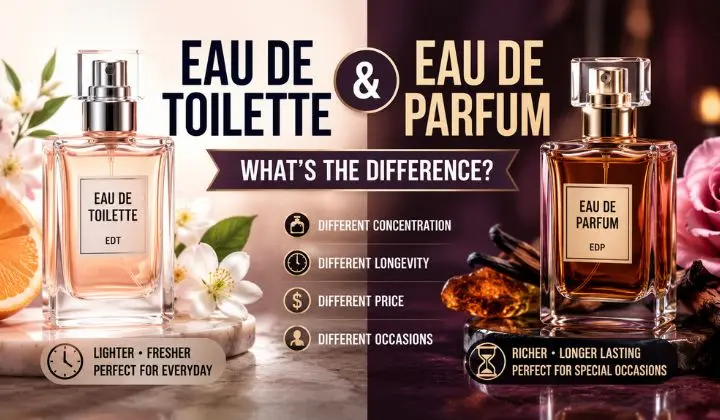
What’s the difference between Eau de Toilette and Eau de Parfum ultimately comes down to one thing: the percentage of fragrance oil in the bottle. Eau de Parfum, often shortened to EDP, contains a noticeably higher concentration of fragrance oil than Eau de Toilette. This isn’t just a marketing distinction, since it directly affects how strong the scent is and how long it lasts on skin. Eau de Toilette, shortened to EDT, uses less fragrance oil relative to the alcohol and water base. This makes EDT lighter, fresher, and generally more subtle than its EDP counterpart.
It’s worth knowing that these terms aren’t legally standardized across the entire industry. There’s no single international regulator that enforces exact percentages for each category. Instead, these concentration ranges function as widely followed industry conventions rather than strict legal definitions. The International Fragrance Association sets safety guidelines for ingredients, but doesn’t formally define these concentration categories. This means slight variation between brands is normal, even within the same labeled category.
Eau de Toilette vs Eau de Parfum: Concentration Breakdown
Eau de Toilette vs Eau de Parfum really comes down to these approximate concentration ranges, which are widely followed across the fragrance industry.
- Eau de Cologne (EDC) — roughly 2% to 5% fragrance oil, the lightest common concentration
- Eau de Toilette (EDT) — roughly 5% to 15% fragrance oil, light and refreshing
- Eau de Parfum (EDP) — roughly 15% to 20% fragrance oil, richer and longer lasting
- Parfum or Extrait de Parfum — roughly 20% to 30% fragrance oil, the most concentrated common format
These ranges can vary slightly between brands, since there’s no single enforced legal standard across the industry. Still, they give a reliable general guide when comparing two versions of the same fragrance.
Eau de Parfum vs EDT: How Longevity Compares
Eau de Parfum vs EDT longevity differences are one of the most noticeable practical effects of this concentration gap. Eau de Toilette generally lasts around four to six hours on skin, depending on the specific fragrance and your skin type. Eau de Parfum typically lasts longer, often six to eight hours or more, thanks to its higher oil concentration. This doesn’t mean EDT is a worse choice, just a different one suited to different needs. A lighter formula that needs reapplying isn’t necessarily a downside if you prefer a more subtle presence.
Note composition also plays a role alongside concentration. A rich Eau de Toilette built around heavy base notes can sometimes outlast a lighter Eau de Parfum built mostly around citrus top notes. Concentration provides the general foundation, but the actual ingredients still matter a great deal. This is why testing a specific fragrance on your own skin gives a far more accurate picture than relying on the label category alone.
Eau de Toilette vs Eau de Parfum: Price and Value
The pricing usually reflects the difference in fragrance oil concentration, though not always by a huge margin. EDP versions of a fragrance are typically priced higher than their EDT counterparts, since they require more concentrated, costlier fragrance oil per bottle. This makes EDT a genuinely practical choice if you’re working with a tighter budget. It also explains why some shoppers buy EDT specifically for daytime or casual use, saving EDP for occasions where longevity matters more.
Value isn’t purely about price per bottle either. Since EDP tends to require fewer reapplications throughout the day, a single bottle can sometimes last just as long in practical use, even at a higher upfront cost. Thinking about how often you’ll need to reapply helps put the price difference into better context. This is a useful way to judge value beyond just comparing sticker prices.
What’s the Difference Between Eau de Toilette and Eau de Parfum for Everyday Wear?
What’s the difference between Eau de Toilette and Eau de Parfum when it comes to daily routines? Eau de Toilette tends to suit warmer weather and casual, everyday settings particularly well. Its lighter concentration feels less overwhelming in close quarters, like an office or a crowded commute. Eau de Parfum, by contrast, suits occasions where you want a more noticeable, longer-lasting presence. Evening events, dates, or colder weather often call for that extra depth and projection.
Many fragrance wearers end up owning both concentrations of a favorite scent for exactly this reason. Reaching for EDT on a hot summer day and switching to EDP for an evening out gives you flexibility without needing entirely different fragrances. This kind of practical rotation is common among people who wear fragrance regularly. It’s a simple way to get more versatility out of a scent you already know you like.
Best Fragrance Concentration for Your Lifestyle
Best fragrance concentration really depends on your daily routine, the climate you live in, and how you like a scent to perform. A few situational recommendations can help narrow down the right choice.
- Warm climates or daily office wear — Eau de Toilette, for a lighter, less overwhelming presence
- Evening events or special occasions — Eau de Parfum, for stronger projection and longer wear
- Cold weather — Eau de Parfum or Parfum, since richer concentrations perform better in dry, cold air
- Sensitive skin — lighter concentrations like EDT or Eau de Cologne, to reduce potential irritation
- All-day performance without reapplying — Parfum or Extrait de Parfum, for the longest-lasting option available
There’s no single “correct” concentration for everyone, since personal preference and lifestyle both play a real role in the right choice.
Eau de Toilette vs Eau de Parfum: Which Should You Choose?
Eau de Toilette vs Eau de Parfum ultimately comes down to a personal decision rather than one being objectively better. If you prefer something light, fresh, and easy to reapply throughout the day, EDT is likely the better fit. If you want a fragrance that lasts through a full day or evening without much thought, EDP is generally the stronger choice. Trying both concentrations of the same fragrance, where available, is the best way to feel the difference for yourself. Many brands offer both formats specifically so shoppers can choose based on preference.
Budget is worth factoring in too, since EDP typically costs more per bottle than EDT. If you’re building a fragrance collection, starting with EDT versions can be a practical way to try more scents without a large upfront investment. Reserving EDP or Parfum purchases for a smaller number of true favorites is a common, sensible approach. There’s no wrong answer here, just a decision based on how you actually plan to wear it.
Shop the Best Fragrance Concentration at Deperfumeshop
Deperfumeshop lists the exact concentration clearly on every product page, making it easy to compare Eau de vs Eau de Parfum options before buying. This removes a lot of the guesswork that often comes with fragrance shopping online. Checking the listed concentration alongside the notes helps you predict both how a fragrance will smell and how long it’s likely to last. Comparing a few different concentrations of the same fragrance, where available, is a great way to find your personal preference. Clear labeling makes this kind of comparison far easier than guessing from a bottle name alone.
Browsing Deperfumeshop‘s wider collection is a good way to explore the best fragrance concentration for your specific needs, whether that’s an everyday EDT or a richer EDP for special occasions. Reading through detailed product descriptions helps set realistic expectations before you buy. Whether you’re new to fragrance or refining an existing collection, understanding concentration is one of the most useful things you can learn. That knowledge makes every future purchase a more informed one.
Conclusion
Eau de Parfum vs EDT isn’t a question of one being better, just a question of what suits your lifestyle and the occasion. Understanding these concentration ranges helps you shop with far more confidence and avoid disappointment. A little knowledge here goes a long way toward getting real value from every bottle you buy.
What’s the difference between Eau de Toilette and Eau de Parfum comes down to fragrance oil concentration, which directly shapes intensity, longevity, and price. Deperfumeshop’s clearly labeled listings make comparing concentrations simple, whether you’re after the best fragrance concentration for daily wear or something special. Testing a sample is always the most reliable way to judge how a specific fragrance performs at a given concentration.
Frequently Asked Questions
Is Eau de Parfum always better than Eau de Toilette?
Not necessarily. EDP generally lasts longer and projects more, but EDT can be the better choice for lighter, everyday wear or warmer climates.
Why is Eau de Parfum usually more expensive than Eau de Toilette?
It typically costs more because it contains a higher concentration of fragrance oil, which is the most expensive ingredient in any perfume formula.
Can I wear Eau de Toilette and Eau de Parfum of the same fragrance interchangeably?
Yes. Many people use EDT for daytime or casual wear and switch to EDP for evenings or occasions needing longer-lasting scent.