

Blog
Best Pheromone Perfumes: What to Know Before Buying

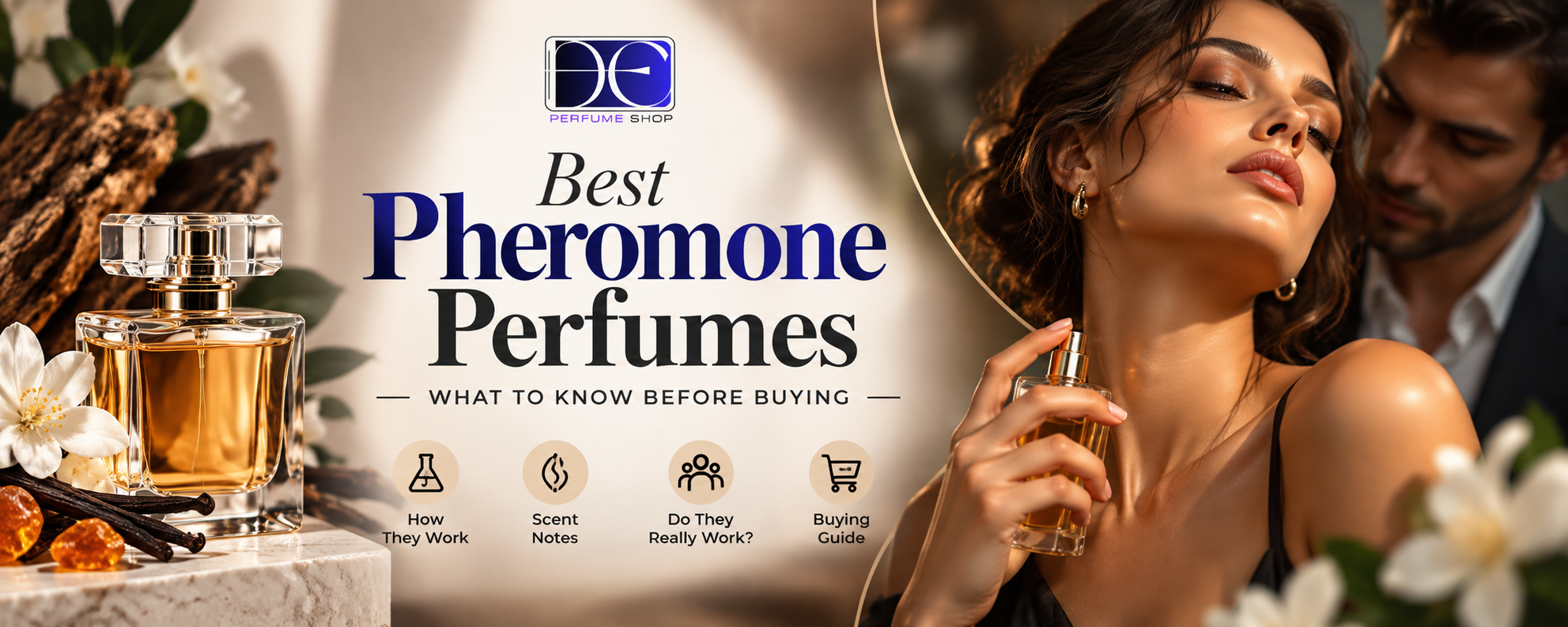
Pheromone fragrances attract plenty of curiosity, and plenty of confusion too. At DePerfume, the questions we hear most often are about what these products really are and whether the claims hold up. This guide covers Best Pheromone Perfumes: What to Know Before Buying in plain terms. You’ll find what the science says, how to read a product description, and how to judge a fragrance on its own merits.
What Are Pheromone Perfumes?
A pheromone perfume is a fragrance marketed as containing pheromones, or as being inspired by them, with the suggestion that it can make the wearer more appealing to others.
In practice, most of these products are ordinary perfumes. They use the same basic building blocks as other fragrances: aromatic ingredients, a carrier such as alcohol or oil, and a blend of top, middle and base notes. The “pheromone” label is mainly a marketing angle rather than a completely different type of perfume.
What Does “Pheromone” Mean?
A pheromone is a chemical signal released by one animal that triggers a response in another animal of the same species. In insects such as ants and moths, this effect is well documented. Moths, for example, can follow a pheromone trail over long distances.
The term entered perfume marketing because it sounds scientific and suggests a hidden chemical shortcut to attraction.
What Does Science Say About Human Pheromones?
The honest answer is that the evidence remains limited and unsettled.
Researchers have studied several compounds, but scientists have not agreed on whether humans have true pheromones that reliably change behaviour. Some small studies have reported effects, while others have failed to reproduce them. Human attraction also depends heavily on personality, context, memory and culture, which makes it difficult to isolate the effect of any single chemical.
So, any product that promises guaranteed results claims more than the current research supports.
Do Pheromone Perfumes Actually Work?
No one can say with certainty that they do. There is no strong evidence showing that a pheromone perfume will automatically make you more attractive to other people.
What a good fragrance can do is much simpler. A scent you enjoy may lift your mood and make you feel more confident, and that confidence can change how you present yourself. That effect comes from enjoying a fragrance you like rather than from a proven chemical signal.
It helps to separate two things:
- Fragrance performance: how the perfume smells, lasts and projects. You can judge this yourself.
- Pheromone claims: statements about attraction. These are difficult to verify and should be treated cautiously.
What Do Pheromone Perfumes Smell Like?
Because there is no standard “pheromone scent,” these perfumes smell like whatever the perfumer chooses to create. However, certain notes appear frequently in products positioned around pheromone or attraction marketing:
- Musk: soft, skin-like and slightly sweet, often used as a base note.
- Amber: warm, resinous and rich.
- Vanilla: creamy and comforting.
- Woody notes: such as sandalwood or cedar, which add dryness and depth.
- Floral notes: such as jasmine or rose, which add brightness or softness.
Many pheromone-positioned scents lean towards warm, musky or sensual profiles. Others are fresh or citrus-led. The actual scent profile tells you far more about a perfume than the marketing label does.
Why Do Fragrances Smell Different on Different People?
The same perfume can smell noticeably different from one wearer to another. Several factors play a part:
- Skin chemistry: your skin’s natural oils, pH and moisture level affect how fragrance molecules evaporate and develop.
- Body chemistry: diet, hormones, medication and temperature can all influence how a scent behaves.
- Scent perception: people detect and interpret smells differently, and personal memories can influence how a fragrance feels.
This variation is one reason why a perfume that smells excellent on one person may disappoint another. It also shows why a friend’s glowing review can never guarantee the same experience for you.
Fragrance Families and Notes Worth Knowing
Perfumes fall into broad families, such as floral, woody, oriental or amber, fresh and gourmand. Each family has its own character, and most perfumes combine elements from more than one family.
Fragrance preferences can vary widely, from soft florals to warmer musks and deep woody blends. Browsing different women’s perfumes is one way to see how these families appear across different scent profiles and how the same note can feel light in one composition and rich in another.
Learning a few notes you consistently enjoy makes shopping far easier than relying on a marketing label alone.
For example, a fragrance such as Hypnotic Poison by Christian Dior 100ml EDT Spray shows how a fragrance can create a distinctive identity through its overall composition rather than relying on a “pheromone” label.
What to Consider Before Buying
How to Judge Pheromone Claims
Treat bold promises with caution. Be wary of wording such as “guaranteed attraction” or “scientifically proven to attract.” Look for clear ingredient lists and honest descriptions of the scent itself. A seller who describes notes, concentration and bottle size gives you information you can actually evaluate.
Fragrance Concentration
Concentration affects strength and lasting power. Here is a simple comparison:
| Type | Typical Fragrance Oil Level | General Character |
| Eau de toilette | Roughly 5–15% | Lighter, fresher, shorter-lasting |
| Eau de parfum | Roughly 15–20% | Richer, longer-lasting |
| Perfume oil | Varies widely | Closer to the skin, often long-wearing |
These figures are approximate, and brands differ in how they formulate their fragrances. Treat them as a general guide rather than a strict rule.
Longevity and Projection
Longevity describes how long a fragrance stays noticeable on your skin. Projection describes how far the scent travels from you. A perfume with strong projection does not always last the longest, and a long-lasting perfume does not necessarily project strongly.
Skin type also matters. Drier skin can sometimes hold fragrance for less time, while moisturised skin may help the scent last longer.
Ingredients and Skin Compatibility
Check the ingredient list if you have sensitive skin or known allergies. Fragrance ingredients can irritate some people, particularly when oils are applied directly to the skin.
Patch-testing a new fragrance on a small area first is a sensible step. If you have a skin condition or a history of fragrance reactions, speak with a pharmacist or doctor before trying something new.
Perfume Formats
- Sprays: easy to apply evenly and suitable for everyday use.
- Oils: often more concentrated, applied in small amounts and usually closer to the skin.
- Roll-ons: compact and precise, making them useful for travel or subtle application.
Price and Value
A higher price does not automatically mean a better scent, and a pheromone label does not justify a premium by itself. Compare the bottle size, concentration and fragrance notes, then ask yourself whether you would still want the perfume without the attraction claims.
A well-known fragrance such as Yves Saint Laurent Myself EDP 100ml is a useful example of why shoppers can judge a fragrance on its actual scent profile, composition and intended use rather than relying only on attraction-focused marketing.
Intended Use
Think about when you plan to wear the fragrance. A light eau de toilette can suit warm days and the office, while a deeper amber or musk blend often works better for evenings and cooler weather.
How to Test a Fragrance Properly
- Use skin, not paper. A blotter shows the opening, but only your skin shows how the scent develops on you.
- Test one or two at a time. Testing too many fragrances at once can overwhelm your nose.
- Wait at least a few hours. Base notes develop slowly, and the first spray rarely tells the complete story.
- Test on different days if you can. Mood, weather and other factors can change how a scent feels.
- Try a sample or small size first. This gives you a chance to live with the fragrance before committing to a full bottle.
Final Thoughts
Pheromone perfumes are best judged like any other fragrance: by how they smell, how long they last and how comfortable they feel on your skin. The attraction claims remain unproven, so treat them as marketing rather than established fact.
If you choose a scent you genuinely enjoy and test it carefully, you give yourself the best chance of being happy with your purchase. Whether you prefer a warm, woody fragrance, a soft floral scent or a fresh everyday perfume, the actual fragrance experience should remain the main reason you choose it.
Frequently Asked Questions
Do pheromone perfumes really attract people?
There is no reliable scientific proof that they do, although a scent you enjoy can boost your confidence and influence how you feel in social situations.
Are human pheromones scientifically proven?
Researchers have studied possible human pheromones, but the evidence remains limited and inconclusive. Scientists have not established a clear human pheromone system that reliably controls attraction.
Which is better, eau de parfum ou eau de toilette?
Eau de parfum usually contains a higher fragrance concentration and often lasts longer, while eau de toilette generally feels lighter and fresher. The better choice depends on your preferences, occasion and how you want the fragrance to perform.
How can I tell if a perfume suits my skin?
Test it directly on your skin and wait a few hours to see how the fragrance develops. If you have sensitive skin, patch-test first and check the ingredient list before using the perfume more widely.