

Blog
The Fragrance Industry in the USA: What You Should Know

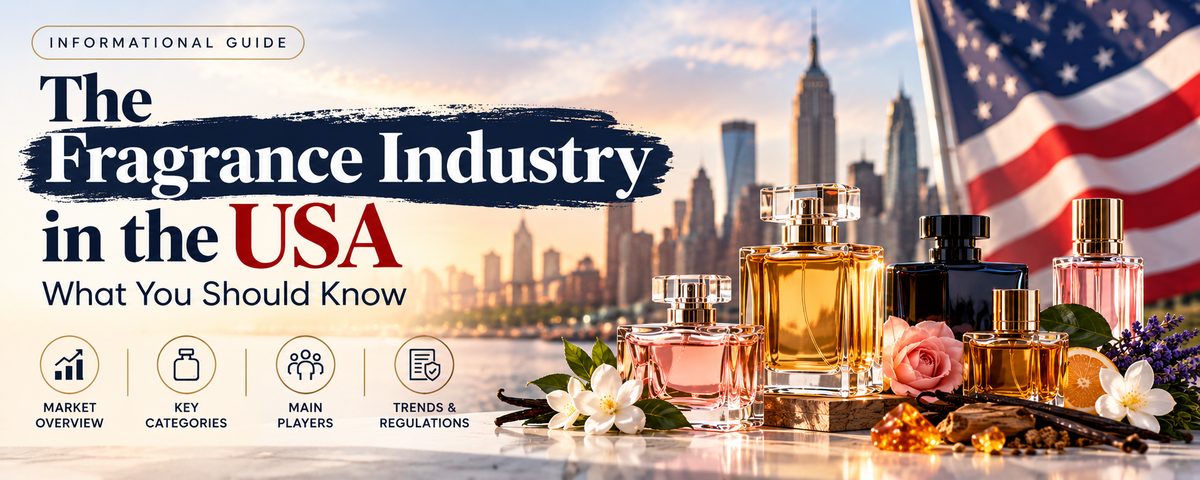
Fragrance sits where beauty, personal care, and gifting meet. Shoppers choose from designer perfumes, niche brands, and low-cost body mists, and new launches arrive every year. This guide explains how the fragrance industry in the USA is structured, who the main players are, and which trends and rules shape it today.
How Big Is the U.S. Fragrance Market?
The answer depends on what a report counts. Some sources track only prestige fragrance sold in department and specialty stores. Others track mass-market fragrance, or forecast the total market, including mass products and sometimes related items such as body sprays. These figures measure different things, so readers should not add them together or compare them directly.
Prestige fragrance. Circana reported that U.S. prestige fragrance sales rose 6% to $5.9 billion from January through September 2025, compared with the same period in 2024. For the full year, Circana said prestige fragrance grew 5% in dollars and ranked as the second-largest segment in prestige beauty. It also said the category showed signs of normalization after several years of extraordinary growth.
Mass-market fragrance. Fragrance is the smallest category in mass beauty, yet it grew fastest. Circana reported a 15% dollar increase for the full year 2025.
Total market forecast. Premium Beauty News, reporting on a talk by The Benchmarking Company, cited a Statista forecast of about EUR 7.9 billion (USD 9 billion) for U.S. fragrance revenue in 2025 . This is a third-party forecast, not Circana’s retail tracking, and it uses a broader definition than prestige-only sales.
Main Fragrance Categories
- Prestige fragrance: Designer and luxury perfumes sold in department stores, beauty retailers, and brand websites.
- Mass-market fragrance: Affordable sprays and mists sold in drugstores and big-box stores.
- Niche perfumes: Small, perfumer-led brands such as Byredo, Le Labo, and Maison Francis Kurkdjian. Circana reported double-digit sales growth for luxury fragrance brands through the third quarter of 2025.
- Body mists: An affordable entry point. The Benchmarking Company says hair and body mist launches have picked up among both prestige and mass brands.
Who Drives the Industry?
Fragrance houses like Givaudan, IFF, dsm-firmenich, and Symrise create the scents. Companies such as Estée Lauder, Coty, and Inter Parfums bring them to market. Sephora, Ulta Beauty, Macy’s, and Nordstrom control much of the shelf space. The Fragrance Foundation promotes the industry in the U.S., and IFRA publishes global safety standards.
Fragrance Concentrations at a Glance
Concentration describes how much fragrance oil a formula contains. The ranges below are commonly cited industry guidelines. Actual percentages vary by formulation and manufacturer, and these terms are not fixed by one universal standard.
| Type | Commonly Cited Fragrance Oil Range | Typical Feel |
| Parfum (extrait) | About 20–30% | Rich |
| Eau de parfum | About 15–20% | Strong, balanced |
| Eau de toilette | About 5–15% | Light, everyday |
| Body mist / cologne | Generally lower | Quick refresh |
Concentration alone does not decide how long a scent lasts. Longevity also depends on the ingredients and fragrance notes used, the formulation, skin type, climate, and how the product is applied.
Visit our website: DePerfume Shop
Where Americans Buy Fragrance
Department stores and specialty retailers still lead in prestige perfume, since shoppers like to test scents in person. Online sales continue to grow as people read reviews and order samples.
Small sizes help shoppers explore. Through September 2025, Circana saw mini and travel sizes grow 12% in units, and mini and discovery sets rose 41% .
Gifting matters too. Circana said prestige fragrance growth in the fourth quarter of 2025 was positive, but makeup, skincare, and hair grew faster during the holiday season.
What Shoppers Want
- Scent as an experience: In a January 2025 survey of 4,000 U.S. consumers, about 95% of them women, The Benchmarking Company found that people use fragrance for reasons ranging from smelling good to enjoying a sensory experience and influencing their mood. Because the sample leaned heavily female, the results do not represent all U.S. consumers.
- Skin-friendly formulas: The same firm describes “skinification,” where shoppers want fragrance products that also offer skin benefits.
- Value: Circana reported that only 14% of U.S. beauty buyers believe higher prices signal better quality.
- Novelty: Circana said new products made up nearly one-third of total fragrance dollar gains in the first half of 2025.
Rules and Safety
The Modernization of Cosmetics Regulation Act (MoCRA), signed in December 2022, expanded the FDA’s authority over cosmetics, including fragrance. Brands must now be able to support the safety of their products.
MoCRA also requires the FDA to issue regulations on fragrance-allergen labeling. That rule is not yet in force. The law set a June 29, 2024 deadline for a proposed rule, and the FDA missed it. Law-firm and industry updates then pointed to a proposal expected in May 2026, and one trade source reported that no proposal had been published as of October 2026. A proposed rule is only a draft, and a final rule must follow before it becomes a legal requirement. Until then, U.S. labels may still list fragrance ingredients collectively as “Fragrance.” Readers should check for the latest status.
The EU has already expanded its list of declarable fragrance allergens from 26 to more than 80 under Regulation (EU) 2023/1545.
IFRA, the International Fragrance Association, publishes safety standards for fragrance ingredients based on risk assessment. These are industry standards, not U.S. law, although manufacturers and retailers widely follow them.
What Lies Ahead
Growth is cooling, competition is rising, and shoppers expect more sustainable choices. Even so, demand holds across price levels. Brands that mix creativity, transparency, and fair pricing will likely keep winning.
Frequently Asked Questions (FAQs)
How big is the fragrance industry in the USA?
Circana counted $5.9 billion in prestige fragrance sales through September 2025, while a Statista forecast puts the broader market near USD 9 billion.
What is the difference between eau de parfum and eau de toilette?
Eau de parfum usually holds more fragrance oil than eau de toilette, though exact percentages vary by brand.
Who regulates fragrance in the United States?
The FDA oversees fragrance as a cosmetic under MoCRA, and its fragrance-allergen labeling rule is still pending, while IFRA’s standards are voluntary.
Which fragrance trends are growing in the U.S.?
Mass-market scents, mini and discovery sets, body mists, and skin-friendly formulas are all growing.