



Blog
Where to Spray Perfume: The Spots That Make a Scent Last

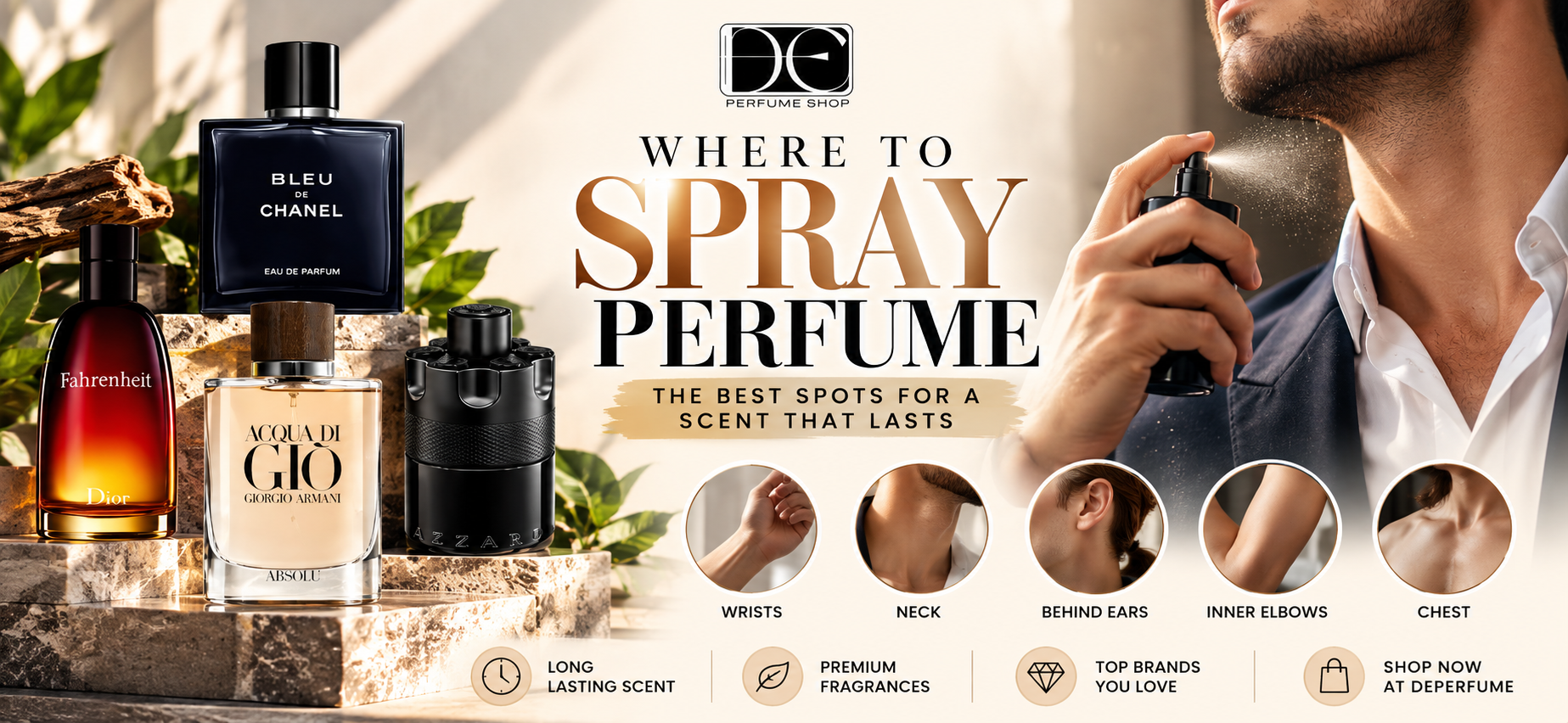
You spray your favorite fragrance, head out the door, and twenty minutes later it’s gone. Frustrating. Most people blame the perfume, but the spot is often the real culprit. If you’re wondering where to soray perfume, the short answer is warm, clean skin near your pulse points: wrists, sides of the neck, inner elbows.
That sounds almost too simple, yet placement changes a lot. Once you know where to soray perfume, a bottle from DePerfume or any other brand gets a fair chance to show what it can do. Below, we’ll cover the best spots, the small habits that waste a good scent, and how to store your bottles so they stay fresh.
The Best Places to Apply Perfume on Your Body
Look for two things: warmth, and blood vessels close to the surface. Heat lifts fragrance off the skin slowly, so the scent opens up in stages instead of hitting you all at once and then disappearing.
Why Pulse Points Work
Press two fingers against the inside of your wrist and you’ll feel your pulse. That’s a pulse point. These areas run a little warmer than the rest of you, which keeps the fragrance gently moving into the air for hours. It’s why almost every list of perfume application tips starts at the wrists and neck.
Common pulse points for fragrance:
- Wrists. Easy to reach. Just don’t rub them together afterward.
- Sides of the neck. Warm and close to your nose, so you actually enjoy the scent yourself.
- Inner elbows. Softer. Good if you like a quieter trail.
- Behind the ears. Old-school, and it suits lighter fragrances well.
- Chest. The scent drifts upward as you move.
Quick Comparison of Application Areas
| Area | Practical Benefit | Precaution |
| Wrists | Easy, warm, reliable | Don’t rub together |
| Neck | Noticeable projection | Skip if skin is sensitive or freshly shaved |
| Inner elbows | Soft, subtle trail | Delicate skin |
| Behind ears | Close, personal scent | Strong if oversprayed |
| Chest | Rises with body heat | Avoid irritated skin |
| Clothing | May hold scent longer | Can stain some fabrics |
How to Apply Perfume Without Overdoing It
Here’s the thing about deperfume spraying: it doesn’t buy you more staying power. It just makes the room louder. Worse, it can trigger scent fatigue, where your nose gets used to the fragrance and stops registering it. So you spray again. And again.
Try one or two sprays first. Hold the bottle roughly six inches from your skin so the mist spreads out rather than soaking a single patch. Then give it a few minutes before you decide it needs a boost.
Best practices worth keeping:
- Apply to clean, dry skin, ideally right after a shower.
- Let it dry on its own.
- Use fewer sprays when the concentration is high.
- Pick two or three spots, not your whole body.
How to Make Perfume Last Longer
Fragrance longevity comes down to three things: your skin, the formula, and how you apply it. Dry skin drinks scent up quickly. Moisturized skin holds it better, which is why plenty of people smooth on an unscented lotion first.
So where to soray perfume is only half of the puzzle. Preparation is the other half. A few simple habits help:
- Moisturize with something unscented before you spray.
- Use a matching body lotion or wash if your fragrance has one.
- Apply after bathing, while your skin is still warm.
- Carry a small travel atomizer for a light touch-up later.
No trick guarantees a set number of hours, though. Skin chemistry, weather, and the fragrance itself all matter, so treat any longevity estimate as a rough guide, not a promise.
Perfume on Clothes vs. Skin
Fabric has no body heat and no natural oils, so it can hold on to a scent longer than skin does. A light mist inside a jacket or on a scarf might still be noticeable at dinner.
But there’s a catch. Perfume can stain silk, pale fabrics, and anything delicate, so test a hidden corner first. The scent also smells a bit different on cloth, because your body heat shapes how a fragrance develops on skin. A decent rule: skin first, clothing as an occasional extra.
How Concentration and Fragrance Oils Affect Longevity
Concentration just means how much fragrance oil is in the bottle compared with alcohol and other ingredients. More oil usually means stronger projection and better staying power. Usually, not always.
From lightest to richest, the standard categories look like this:
- Eau de cologne
- Eau de toilette
- Eau de parfum
- Parfum (extrait)
Exact percentages vary from brand to brand, so think of this as a general ladder. If you want the numbers for a particular bottle, check its label or product page.
Bottle Size and Storage Basics
Bottle design matters more in daily life than most buyers expect. A large flacon looks lovely on a dresser but is a hassle in a gym bag. A small one slips into a pocket and gets used more often. Check the listed size and dimensions before you buy, so there are no surprises when the box arrives.
Heat, light, and air do the most damage to perfume over time. A few fragrances storage tips go a long way:
- Store bottles somewhere cool and dark, like a drawer or closet.
- Keep them out of the bathroom. Steam and temperature swings can change the scent.
- Close the cap firmly after each use.
- Hang on to the original box when you can.
- Never leave perfume in a hot car or on a sunny windowsill.
Common Perfume Application Mistakes
Even a beautiful fragrance can fall flat with sloppy application. These are the usual slip-ups:
- Rubbing wrists together, which can dull the top notes.
- Spraying onto dry skin with no prep.
- Adding more spritzes because you can’t smell it anymore.
- Keeping bottles in a steamy bathroom.
- Applying to irritated or freshly shaved skin.
- Spraying delicate fabric without testing it first.
Skin Safety and Sensible Precautions
People react to fragrance differently. An ingredient that’s fine for one person may bother another, and perfume can cause irritation or allergic reactions in some cases. It isn’t a medical product either, so don’t expect it to treat or prevent any skin condition.
Before you wear a new scent regularly, try a small amount on your inner forearm and wait. Follow the directions on the packaging. If you notice redness, itching, or discomfort, stop using it and rinse the area with water. For ongoing trouble, see a dermatologist. The American Academy of Dermatology is a credible place to read up on fragrance allergies.
Finding Your Scent at DePerfume
Good technique helps, but you’ll reach for a fragrance more often if you truly like it. DePerfume offers a range of scents you can browse by your own preferences. Before ordering, read the product page for bottle size, concentration, and notes, since those details change from one fragrance to the next.
Everything above is general fragrance advice. For anything specific to a DePerfume product, like ingredients or sizes, go by what’s listed with that product.
Frequently Asked Questions
- Where should I spray perfume for better longevity?
Warm, moisturized pulse points like the wrists, neck, and inner elbows work best. - Is it better to apply perfume to skin or clothes?
Skin lets the scent develop with your body heat, while fabric may hold it longer but can stain. - How can I stop perfume from fading quickly?
Spray it on hydrated skin right after a shower and refresh lightly with a travel atomizer. - Can perfume irritate sensitive skin?
Yes, some people react to fragrance ingredients, so patch test first and stop if irritation appears. - How should I store perfume to preserve its quality?
Keep it capped in a cool, dark place away from heat, sunlight, and humidity.