

Blog
Oud Perfume: Why Is It So Expensive? The Truth May Surprise You

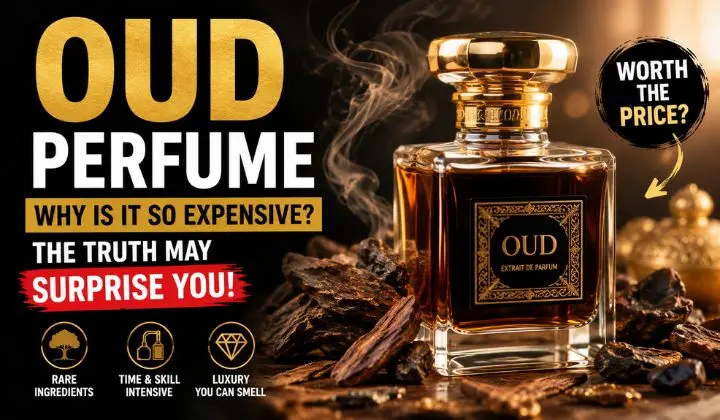
Walk into any perfume store, and you’ll quickly notice something unusual. One bottle of oud perfume costs £40, while another sits behind a glass cabinet with a price tag of £400, £800, or even more than £2,000. At first glance, both bottles claim to contain oud, both promise a luxurious scent, and both come from well-known fragrance brands. So why is there such a huge difference in price?
Many people assume they are simply paying for a famous logo or an expensive bottle. While branding can influence the cost, it is far from the biggest reason. The truth begins long before a perfume reaches the shelf. It starts deep inside forests, where nature takes years sometimes decades to create one of the rarest fragrance ingredients in the world.
Unlike many perfume ingredients that can be harvested every season, oud cannot be produced whenever manufacturers need more. It depends on a slow and unpredictable natural process that very few trees ever experience. Even after the precious material is found, skilled craftsmen spend countless hours extracting, refining, and blending it into a luxury fragrance. By the time a bottle reaches your hands, it carries years of nature’s work and generations of perfumery expertise.
That is why oud perfume fragrance has earned a reputation as one of the most exclusive categories in modern perfumery. Whether you are exploring a premium niche fragrance, a famous creation like oud wood tom ford perfume, or a warm and comforting honey oud perfume, understanding the story behind oud changes the way you look at every bottle.
In this guide, you’ll discover what oud really is, why it is often called “liquid gold,” how it is produced, and what makes some oud fragrances worth hundreds or even thousands of pounds. You’ll also learn what sets premium oud perfumes for men apart from ordinary fragrances and why they continue to be a popular choice among luxury fragrance lovers. More importantly, you’ll learn how to tell the difference between true value and clever marketing, so you can choose an oud fragrance with confidence.
What Is Oud Perfume?
Before understanding why oud is so expensive, it helps to know what it actually is.
Oud perfume is a fragrance made using oud oil, a highly prized ingredient extracted from the resin-rich heartwood of the Aquilaria tree. You may also hear it called agarwood, aloeswood, or simply oud. Although these names are often used interchangeably, they all refer to the same rare material that has fascinated perfume lovers for centuries.
What makes oud different from other fragrance ingredients is its origin. Flowers such as jasmine and rose bloom every year. Citrus fruits can be harvested in large quantities. Even ingredients like lavender and sandalwood can be cultivated on a commercial scale.
Oud doesn’t work that way.
The Aquilaria tree grows naturally in countries such as India, Cambodia, Vietnam, Laos, Thailand, and Malaysia. Under normal conditions, the wood inside the tree has very little fragrance. Everything changes only when the tree is wounded or naturally infected by a specific type of fungus.
To protect itself, the tree slowly produces a dark resin around the damaged area. Over many years, this resin spreads through the heartwood, creating the rich, aromatic material known as agarwood. It is this resin not the ordinary wood that perfume makers are searching for.
The remarkable part is that only a small percentage of Aquilaria trees ever produce this valuable resin. Many trees spend decades growing without creating any oud at all. This rarity is one of the biggest reasons authentic natural oud perfume commands such high prices.
Today, oud has become a symbol of luxury across the world. Traditional Middle Eastern perfumers have treasured it for centuries, while modern fragrance houses continue to reinvent it in contemporary perfumes that appeal to both experienced collectors and first-time buyers.
Why Is Oud Called Liquid Gold?
Few fragrance ingredients have earned a nickname as prestigious as “liquid gold.”
People often assume this name exists because oud is used in luxury perfumes, but the real reason goes much deeper.
Imagine searching through thousands of mature Aquilaria trees in a dense forest. They all look almost identical from the outside. Yet only a handful contain the dark resin needed to produce genuine oud.
Finding those trees takes patience, knowledge, and a little luck.
Even after discovering resin-rich wood, the journey has only just begun. The wood must be carefully separated, cleaned, soaked, and distilled using traditional methods that preserve its rich aroma. The process is slow, labour-intensive, and produces only a very small amount of pure oud oil.
This means a large quantity of valuable agarwood may yield only a limited amount of fragrance oil.
When you combine rarity, time, craftsmanship, and global demand, the result is an ingredient that can be worth more than many precious materials on a weight-for-weight basis. That is why perfumers, collectors, and fragrance enthusiasts often describe oud as liquid gold.
But oud is valuable for another reason as well.
Unlike many modern fragrance ingredients that smell almost identical every time, natural oud develops its own personality. The aroma changes depending on where the tree grows, how much resin it produces, how the oil is distilled, and even how long the oil has been aged.
No two batches are ever exactly the same.
That uniqueness is something luxury perfume lovers appreciate because it makes every fragrance feel more personal and exclusive.
Why Is Oud Perfume So Expensive?
This is the question that brings most people here.
The simple answer is that authentic oud is one of the rarest natural perfume ingredients in the world.
The complete answer, however, is much more fascinating.
Nature Decides When Oud Is Created
Most perfume ingredients can be farmed, harvested, and processed according to demand.
Oud cannot.
An Aquilaria tree doesn’t automatically produce fragrant resin. It only begins creating resin after responding to natural stress, such as fungal infection or physical damage. Even then, there is no guarantee the tree will generate enough resin to create valuable agarwood.
In other words, perfume makers cannot simply order more natural oud whenever they need it.
Nature decides.
That unpredictability makes genuine agarwood one of the most difficult fragrance materials to source.
Time Is One of the Biggest Costs
Many luxury products are expensive because they require skilled craftsmanship.
Oud requires something even more valuable time.
A tree may spend decades growing before it develops enough resin for harvesting. During those years, there is no certainty that the tree will ever produce usable agarwood.
This means perfume houses are not only paying for raw materials. They are paying for years of natural development that cannot be rushed or replicated.
Few industries rely so heavily on patience.
Supply Is Limited, but Demand Keeps Growing
For centuries, oud remained closely associated with Middle Eastern culture, where it was used in perfumes, oils, and traditional incense.
Today, the story is very different.
Luxury fragrance houses from Paris, Milan, London, New York, and Dubai all compete for access to high-quality oud. As global demand continues to rise, the supply of premium agarwood remains limited.
Basic economics explains what happens next.
When demand increases faster than supply, prices rise.
That is exactly what has happened with authentic oud perfume fragrance over the past few decades.
Craftsmanship Adds More Value
Producing a luxury oud fragrance isn’t simply about mixing ingredients together.
Master perfumers spend years learning how to balance oud with complementary notes such as rose, saffron, sandalwood, amber, vanilla, leather, and musk.
Too much oud can overpower the fragrance.
Too little and its unique character disappears.
Creating the perfect balance requires experience, creativity, and hundreds of trials before the final formula is approved.
That expertise is another reason premium oud perfumes command higher prices than many ordinary fragrances.
Why Luxury Brands Continue Investing in Oud
If oud is so expensive, why do the world’s leading perfume houses continue using it?
The answer is simple.
Oud creates an experience that very few ingredients can match.
It brings richness, depth, warmth, and remarkable longevity to a fragrance. A well-crafted luxury oud perfume evolves throughout the day, revealing new layers as it settles on the skin. This constantly changing character is one of the reasons fragrance enthusiasts are willing to invest in high-quality oud creations.
Take oud wood tom ford perfume as an example.
Rather than presenting oud in its traditional, intensely smoky form, Tom Ford blended it with sandalwood, cardamom, vanilla, and amber to create a fragrance that feels elegant, smooth, and approachable. It introduced many Western fragrance lovers to oud without overwhelming them, helping transform oud from a regional favourite into a global luxury trend.
Modern creations such as honey oud perfume have taken this evolution even further. By pairing rich oud with warm honey accords and soft gourmand notes, perfumers have created fragrances that appeal to people who might otherwise find traditional oud too intense.
This ability to adapt while maintaining its luxurious identity is one of the biggest reasons oud continues to dominate the premium fragrance market.
As you’ll discover in the next section, understanding how oud is made reveals even more about why this extraordinary ingredient has become one of the most respected and expensive materials in the world of perfumery.
How Oud Perfume Is Made
When people hear about the price of oud perfume, they often imagine that the perfume itself is expensive to produce. In reality, the biggest challenge begins long before the fragrance reaches a perfume laboratory. It starts in nature, where one of the world’s rarest raw materials slowly takes shape over many years.
Unlike flowers that bloom every season or herbs that can be harvested every few months, oud cannot be mass-produced. Every drop of authentic oud oil is the result of a slow natural process that requires patience, expertise, and a little luck.
From Aquilaria Tree to Agarwood
The journey begins with the Aquilaria tree, a species native to Southeast Asia. These trees grow in countries such as India, Cambodia, Vietnam, Laos, Thailand, and Malaysia, where warm climates provide the ideal conditions for healthy growth.
At first, the wood inside the tree has almost no fragrance. In fact, if an Aquilaria tree remains healthy throughout its life, it may never produce oud at all.
Everything changes when the tree experiences natural stress. This can happen because of physical damage, insects, or a fungal infection. To defend itself, the tree begins producing a thick, dark resin around the affected area. Over time, this resin spreads through the heartwood, gradually transforming ordinary wood into fragrant agarwood.
This process is entirely controlled by nature. Some trees develop only a small amount of resin, while others never produce any. That uncertainty is one of the biggest reasons authentic natural oud perfume remains so rare.
How Oud Oil Is Extracted
Once resin-rich agarwood has been carefully harvested, it is sorted according to quality. Skilled workers remove unwanted pieces of wood by hand, leaving behind only the dark sections that contain valuable resin.
The selected wood is then cleaned, cut into smaller pieces, and soaked in water before the distillation process begins.
Traditional steam distillation is still one of the most respected methods for producing agarwood oil. Steam slowly passes through the resin-rich wood, carrying fragrant molecules into a cooling system where they condense into liquid. The oil is then carefully separated from the water.
This isn’t a process that takes a few hours.
Depending on the quality of the wood and the desired result, distillation can continue for several days. Some artisan producers even repeat the process to create oils with greater depth and complexity.
The final result is pure oud oil, one of the most valuable ingredients in luxury perfumery.
Why Production Is Limited
Many people wonder why perfume companies don’t simply grow more Aquilaria trees to increase production.
The answer is simple.
Growing the tree is only the beginning.
Even cultivated trees need many years before they mature, and there is still no guarantee they will produce high-quality resin. Although some plantations use controlled inoculation methods to encourage resin formation, naturally formed oud is still considered more desirable by many fragrance enthusiasts.
Another important factor is sustainability.
Because wild Aquilaria trees were heavily harvested in the past, several species are now protected under international conservation agreements. Responsible perfume houses increasingly rely on sustainable plantations to help preserve natural forests while meeting global demand.
This careful balance between conservation and production makes authentic oud fragrance even more valuable.
What Does Oud Smell Like?
If you’ve never experienced an authentic oud perfume fragrance, describing its scent can be surprisingly difficult.
Unlike citrus or floral perfumes that often smell exactly as expected, oud is far more complex. It changes over time, reacts differently on each person’s skin, and can smell slightly different depending on where the agarwood originated.
That complexity is one reason perfume lovers become so passionate about oud.
The Signature Scent of Oud
Most people describe oud using words like:
- Rich
- Deep
- Woody
- Warm
- Smoky
- Resinous
- Earthy
- Leathery
- Slightly sweet
At first, these descriptions may sound unusual. Yet when blended by an experienced perfumer, they come together to create a fragrance that feels elegant, mysterious, and unforgettable.
Natural oud doesn’t try to smell clean or fresh like many everyday perfumes.
Instead, it tells a story.
It opens with a rich woody character, develops into warm resinous notes, and eventually settles into a smooth, luxurious dry down that can remain noticeable for many hours.
This evolving character is one reason collectors often prefer authentic oud over simpler fragrance ingredients.
Why Oud Smells Different on Every Person
One of the most fascinating things about oud perfume is that two people can wear the same fragrance and experience it differently.
Several factors influence how oud develops on the skin, including body chemistry, skin temperature, natural oils, climate, and even humidity. A perfume that smells smoky and intense on one person may appear softer and sweeter on someone else.
This is why fragrance experts always recommend testing an oud perfume on your own skin instead of relying only on paper tester strips. The real beauty of oud reveals itself during the hours after application, not just during the first few minutes.
Popular Notes Paired with Oud
Although oud is impressive on its own, perfumers often combine it with other ingredients to create fragrances that appeal to different tastes.
Some of the most successful combinations include:
- Rose, which adds elegance and softness.
- Saffron, which creates a warm, spicy character.
- Amber, which enhances richness and depth.
- Vanilla, which balances smoky notes with gentle sweetness.
- Sandalwood, which creates a creamy woody finish.
- Musk, which improves longevity and smoothness.
- Patchouli, which adds earthy sophistication.
- Cardamom, which introduces fresh spice.
These combinations explain why modern luxury oud perfume collections feel so diverse.
For example, honey oud perfume blends the richness of oud with warm honey accords, creating a fragrance that feels comforting and approachable. On the other hand, oud wood tom ford perfume pairs oud with sandalwood, cardamom, amber, and vanilla to create a refined scent that introduced many Western perfume lovers to the beauty of oud.
No matter the composition, one thing remains constant: oud provides the depth and character that transform an ordinary fragrance into something memorable.
Why Oud Continues to Fascinate Perfume Lovers
Fragrance trends come and go.
Some ingredients become popular for a few years before disappearing from store shelves. Oud has followed a very different path.
For centuries, it has remained one of the most respected ingredients in the perfume world because it offers something that very few materials can match: individuality.
Every piece of agarwood is unique.
Each batch of oil tells a slightly different story.
All fragrance develops differently on the skin.
That uniqueness creates an emotional connection between the perfume and the person wearing it.
For many fragrance enthusiasts, buying an oud perfume isn’t simply about smelling good. It’s about owning something rare, appreciating centuries of craftsmanship, and experiencing one of nature’s most extraordinary gifts.
As the popularity of Arabic oud perfume, niche fragrances, and luxury perfume collections continues to grow, understanding what makes oud special becomes even more important.
In the next part, we’ll explore the difference between natural and synthetic oud, explain what really affects the price of an oud perfume, examine why some bottles cost thousands of pounds, and help you decide whether investing in an expensive oud fragrance is truly worth it.
Natural Oud vs Synthetic Oud
When shopping for an oud perfume, you’ll often notice huge differences in price. One fragrance might cost £60, while another costs more than £600. Many people assume the expensive bottle simply comes from a luxury brand, but there’s another important factor that affects the price: the type of oud used in the fragrance.
Today, most perfumes fall into one of two categories. Some use genuine natural oud, while others use synthetic oud or a carefully created oud accord. Both have their place in modern perfumery, but understanding the difference can help you make a smarter buying decision.
What Is Natural Oud?
Natural oud is produced from resin-rich agarwood that forms inside the Aquilaria tree over many years. Once the resin has fully developed, skilled artisans carefully distil it to create pure oud oil.
Every batch of natural oud is unique. The scent can change depending on where the tree grew, how old it was, the amount of resin it produced, and even the distillation method used. This is one reason collectors often describe natural oud as a living fragrance it evolves beautifully from the first spray to the final dry down.
A high-quality natural oud perfume usually feels rich, smooth, and full of character. Instead of staying the same all day, it gradually reveals new layers, making every wearing experience slightly different.
What Is Synthetic Oud?
Not every perfume containing oud uses natural agarwood.
Many modern fragrances use synthetic aroma molecules designed to recreate the scent of oud. These ingredients are developed in laboratories and allow perfumers to capture the woody, smoky, and resinous character of oud without relying entirely on rare natural resources.
This doesn’t automatically mean the perfume is poor quality.
In fact, many luxury fragrance houses combine small amounts of natural oud with carefully crafted synthetic accords to create a balanced scent that is easier to wear and more consistent from bottle to bottle.
For beginners, a well-made synthetic oud perfume fragrance can be an excellent introduction to this fragrance family.
Which One Should You Choose?
There isn’t a single right answer because it depends on your expectations.
If you’re passionate about rare ingredients, craftsmanship, and traditional perfumery, natural oud offers an experience that is difficult to replicate.
However, if you simply want a beautiful fragrance with excellent performance at a more affordable price, a high-quality synthetic oud perfume can be a fantastic choice.
Rather than asking whether natural or synthetic is better, ask yourself a more useful question:
Does this perfume smell good, perform well, and suit my personal style?
That’s the question that matters most.
What Affects the Price of Oud Perfume?
People often believe the price of an oud perfume depends only on the amount of oud inside the bottle.
The reality is much more complex.
Several factors influence the final price, and understanding them will help you recognise whether you’re paying for genuine quality or simply an expensive label.
The Quality of the Oud
Not all oud is created equal.
Just as coffee, tea, and wine vary in quality depending on where they are produced, agarwood also differs from one region to another.
Some pieces contain only small amounts of resin, while others are heavily saturated, producing deeper, smoother, and more complex aromas.
Higher-quality agarwood naturally produces more valuable oud oil, making the finished perfume more expensive.
Country of Origin
The origin of the agarwood has a significant impact on both aroma and value.
For example:
- Cambodian oud is often known for its smooth sweetness.
- Indian oud tends to be darker and more animalic.
- Laotian oud is admired for its balance and elegance.
- Vietnamese oud is prized for its rich, resinous character.
These regional differences explain why experienced collectors often pay premium prices for oud from specific locations.
Perfume Concentration
Another important factor is perfume concentration.
A fragrance with a higher percentage of perfume oil generally lasts longer and develops more smoothly on the skin.
Luxury Eau de Parfum and Extrait de Parfum formulations often contain richer concentrations, allowing the beauty of oud to unfold gradually throughout the day.
Although concentration isn’t the only measure of quality, it certainly contributes to the overall value of a perfume.
Craftsmanship
Creating a memorable oud fragrance requires far more than mixing ingredients together.
Master perfumers spend months, sometimes years testing different combinations before approving the final formula.
Balancing oud with ingredients such as rose, saffron, amber, vanilla, musk, and sandalwood requires exceptional skill.
Even small adjustments can completely change the personality of a fragrance.
That level of expertise is one reason luxury perfume houses continue to invest heavily in experienced perfumers.
Brand Reputation
Let’s be honest.
Brand reputation also affects the price.
When you purchase a fragrance from an internationally recognised perfume house, you’re paying for more than the liquid inside the bottle.
You’re paying for research, design, craftsmanship, quality control, packaging, marketing, and decades of brand heritage.
For example, oud wood tom ford perfume has become one of the world’s most recognised oud fragrances. Part of its price reflects the prestige of the Tom Ford brand, but another part reflects its carefully balanced composition, premium ingredients, and consistent performance.
Why Western Oud and Arabic Oud Smell Different
One question many fragrance lovers ask is why a Western oud perfume often smells completely different from an Arabic oud perfume.
The answer lies in tradition and fragrance preferences.
For centuries, oud has been deeply connected to Middle Eastern culture. Traditional Arabic perfumes celebrate the bold, smoky, resinous, and sometimes animalic side of natural oud. These fragrances are often powerful, long-lasting, and designed to leave a memorable impression.
Western perfume houses, on the other hand, usually create oud fragrances that feel softer and easier to wear every day.
Instead of allowing oud to dominate the composition, they blend it with ingredients such as bergamot, cardamom, vanilla, sandalwood, and amber. This creates a smoother fragrance that appeals to a wider audience.
Neither approach is better.
They simply tell different fragrance stories.
If you enjoy bold, traditional scents, an Arabic oud perfume may suit you perfectly.
If you prefer something elegant and modern, a Western interpretation could be a better choice.
This difference explains why two perfumes containing oud can smell completely different despite sharing the same signature ingredient.
Why Oud Became a Symbol of Luxury
Today, oud perfume is often associated with elegance, exclusivity, and wealth. It appears in the collections of famous perfume houses, luxury boutiques, and niche fragrance brands around the world. But oud didn’t become a luxury ingredient overnight. Its reputation has been built over centuries through rarity, craftsmanship, and cultural importance.
Long before designer perfumes existed, oud was already one of the most treasured natural materials in the Middle East and parts of Asia. Royal families, merchants, and wealthy collectors valued agarwood because it was difficult to find and almost impossible to replace. Burning agarwood chips during special occasions became a symbol of hospitality, while pure oud oil was worn as a personal fragrance during celebrations, religious gatherings, and important events.
Unlike many modern perfume ingredients, oud was never just about smelling good. It represented status, tradition, and refinement. Owning high-quality agarwood meant owning something that nature had spent decades creating.
That perception continues today. Although modern technology has introduced synthetic alternatives, authentic luxury oud perfume still carries the same sense of exclusivity that made it famous centuries ago.
A Brief History of Oud
The story of oud stretches back thousands of years.
Historical records show that agarwood was traded across Asia and the Middle East long before the modern perfume industry existed. Merchants transported this precious wood along ancient trade routes, where it became one of the most valuable luxury goods of its time.
In countries such as Saudi Arabia, the United Arab Emirates, Oman, and Qatar, oud became deeply connected with culture and tradition. Families burned agarwood as bakhoor to perfume homes, welcome guests, and prepare for weddings and religious celebrations.
In Japan, agarwood was appreciated in the traditional art of incense known as Kōdō, where people gathered to experience and appreciate rare aromatic woods. This demonstrates that oud has been admired across different cultures for its beauty rather than simply for its rarity.
Its long history adds another layer of value to modern oud perfume fragrance, making every bottle part of a tradition that spans generations.
The Rise of Oud in Modern Perfumery
For many years, oud remained most popular in Middle Eastern fragrance culture. Everything changed when leading perfume houses recognised its global appeal.
Luxury brands began experimenting with oud by blending it with familiar Western ingredients. Instead of creating fragrances that felt heavy or challenging, they introduced softer interpretations that appealed to a wider audience.
One fragrance that helped shape this movement was oud wood tom ford perfume. Rather than focusing on the bold, smoky character found in traditional Arabic perfumes, Tom Ford combined oud with cardamom, sandalwood, amber, and vanilla. The result was sophisticated, wearable, and instantly recognisable.
Soon after, many other brands followed. Today, oud appears in designer collections, niche fragrances, and premium oud perfumes created for both men and women.
This global popularity has increased demand for high-quality agarwood, making authentic oud even more desirable.
Popular Oud Perfumes Worth Knowing
If you’re thinking about buying your first oud perfume, you’ll quickly discover that there are hundreds of options available. While personal preference always matters most, a few fragrances have earned outstanding reputations because of their quality, craftsmanship, and unique interpretation of oud.
Oud Wood Tom Ford Perfume
Few fragrances have introduced as many people to oud as oud wood tom ford perfume.
Released as part of the Tom Ford Private Blend collection, it became famous for making oud feel elegant rather than overwhelming.
Instead of relying solely on smoky agarwood, it combines oud with sandalwood, cardamom, vanilla, amber, and tonka bean. This creates a fragrance that is smooth, warm, and versatile enough for everyday wear.
Many fragrance experts consider it one of the best entry points into the world of luxury oud.
Honey Oud Perfume
For people who prefer sweeter fragrances, honey oud perfume offers a completely different experience.
Rather than highlighting the darker side of oud, these fragrances combine rich agarwood with golden honey, soft amber, vanilla, and warm spices.
The sweetness balances the woody depth, creating a scent that feels cosy, inviting, and easy to wear during autumn and winter.
If traditional oud seems too intense, a honey oud fragrance is often an excellent place to begin.
Maison Francis Kurkdjian Oud
Maison Francis Kurkdjian has become one of the most respected names in modern perfumery.
Its oud collection combines French elegance with the richness of Middle Eastern fragrance traditions. Instead of overpowering the wearer, these perfumes focus on balance, refinement, and exceptional ingredient quality.
The result is an oud perfume fragrance that feels luxurious without becoming overwhelming.
Arabian Oud Collections
When discussing authentic Arabic oud perfume, Arabian Oud is a name that deserves attention.
Known for celebrating traditional Middle Eastern perfumery, the brand offers fragrances that showcase the bold, resinous, and long-lasting character of genuine oud.
For experienced fragrance lovers looking to explore classic Arabic compositions, Arabian Oud remains one of the most respected choices.
How to Choose the Right Oud Perfume
Choosing the perfect oud perfume isn’t about buying the most expensive bottle. The best fragrance is the one that matches your personality, lifestyle, and fragrance preferences.
Choose Based on Your Style
Ask yourself what type of fragrance you usually enjoy.
If you prefer fresh, clean scents, start with a softer oud fragrance blended with citrus, lavender, or sandalwood.
If you enjoy bold and mysterious perfumes, richer Arabic oud perfume compositions may suit you better.
Your existing fragrance preferences often provide the best starting point.
Match the Occasion
Some oud perfumes work beautifully during the day, while others are better suited for evening events.
Lighter compositions with floral or woody notes are excellent for offices, business meetings, and everyday wear.
Richer fragrances featuring amber, leather, spices, and vanilla often perform best during dinners, celebrations, and colder seasons.
Choosing the right fragrance for the right occasion allows you to enjoy oud without it feeling too heavy.
Consider Your Budget
A high price doesn’t always guarantee a better perfume.
Many affordable brands now produce excellent oud fragrance options using high-quality synthetic accords alongside carefully selected natural ingredients.
If you’re new to oud, beginning with a reasonably priced fragrance allows you to explore this fragrance family before investing in a premium bottle.
Buy from Trusted Retailers
The popularity of oud has unfortunately led to an increase in counterfeit products.
To avoid disappointment, purchase from trusted retailers or established fragrance specialists.
If you’re exploring authentic luxury fragrances, De Perfume Shop offers a carefully selected range of premium perfumes that can help you discover genuine oud fragrances with confidence.
Common Myths About Oud Perfume
As oud has become more popular, several myths have also become widespread.
Let’s separate fact from fiction.
Myth 1: All Oud Is Natural
This is one of the biggest misconceptions.
Many modern perfumes use synthetic oud accords or combine natural and synthetic ingredients to create a balanced fragrance.
That doesn’t automatically make the perfume lower quality.
Myth 2: Expensive Always Means Better
Price is important, but it isn’t everything.
Some luxury fragrances cost more because of branding, packaging, or limited production rather than the amount of natural oud they contain.
Always judge a fragrance by its quality, performance, and how much you enjoy wearing it.
Myth 3: Oud Is Only for Men
Not at all.
Today’s oud perfumes are created for everyone.
Many women’s fragrances pair oud with rose, jasmine, vanilla, or honey, creating elegant compositions that feel soft and sophisticated.
Likewise, many modern unisex fragrances focus on balance rather than traditional gender categories.
Is Oud Perfume Worth the Price?
For many people, the answer is yes but it depends on what you’re looking for.
If you simply want a pleasant everyday fragrance, there are plenty of affordable perfumes that smell wonderful.
However, if you appreciate craftsmanship, rare ingredients, and fragrances that evolve beautifully throughout the day, investing in a premium oud perfume can be worthwhile.
The key is understanding what you’re paying for.
You’re not just buying perfume.
You’re buying years of natural growth, skilled artistry, careful blending, and one of the world’s most respected fragrance ingredients.
When chosen carefully, an authentic oud fragrance becomes more than another bottle on your shelf. It becomes a signature scent that leaves a lasting impression.
Frequently Asked Questions
Why is oud perfume so expensive?
Oud perfume is expensive because genuine agarwood is extremely rare, takes many years to develop, and produces only a small amount of valuable oud oil. The careful harvesting, traditional distillation process, and growing global demand also contribute to its premium price.
What does oud perfume smell like?
Oud has a rich, woody, smoky, and resinous aroma with earthy and slightly sweet undertones. Depending on the blend, it may also include notes of rose, amber, vanilla, saffron, or sandalwood, creating a fragrance that changes beautifully throughout the day.
Is natural oud better than synthetic oud?
Natural oud offers greater depth and uniqueness because every batch develops differently. Synthetic oud, however, provides excellent consistency, sustainability, and affordability. The better choice depends on your budget and personal preferences.
Why is Oud Wood Tom Ford perfume so popular?
Oud wood tom ford perfume introduced many Western fragrance lovers to oud by creating a smoother, more approachable interpretation. Its blend of oud, sandalwood, cardamom, amber, and vanilla makes it easier to wear while maintaining a luxurious character.
Is honey oud perfume suitable for beginners?
Yes. Honey oud perfume combines the richness of oud with sweet honey and warm gourmand notes, making it softer and more approachable than traditional Arabic oud fragrances. It is often recommended as an excellent introduction to the oud fragrance family.
How long does oud perfume last?
A high-quality oud perfume fragrance can last anywhere from eight to twelve hours, depending on its concentration, ingredients, and your skin chemistry. Extrait de Parfum and Eau de Parfum formulations usually offer the best longevity.
Final Thoughts
The next time you see the price of an oud perfume, you’ll know there’s much more behind it than an attractive bottle or a famous brand name.
From the slow formation of resin inside the Aquilaria tree to the careful extraction of oud oil, every stage requires time, patience, and exceptional craftsmanship. That journey is what transforms agarwood into one of the most respected ingredients in luxury perfumery.
Whether you choose a classic Arabic oud perfume, a modern fragrance like oud wood tom ford perfume, or a softer honey oud perfume, understanding the story behind oud allows you to appreciate its true value.
The best fragrance isn’t always the most expensive one. It’s the one that matches your personality, fits your lifestyle, and makes you feel confident every time you wear it. If you’re ready to explore authentic luxury fragrances, De Perfume Shop can help you discover carefully selected perfumes that combine quality, craftsmanship, and timeless elegance.