

Blog
Botanical Fragrance & Botanical Perfume: Benefits, Uses & How to Choose

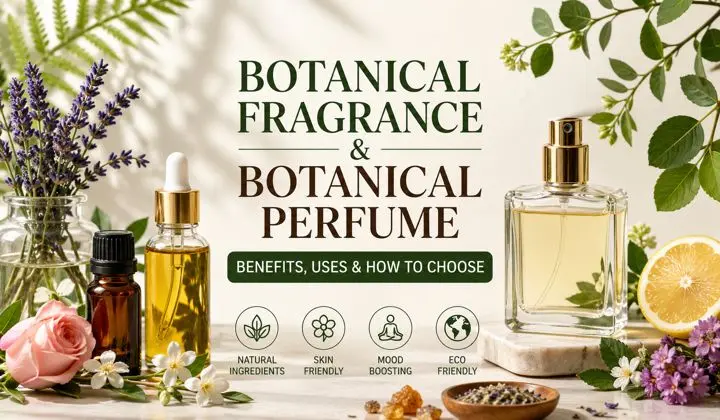
Botanical fragrance and botanical perfume are scents made from plant-based ingredients such as essential oils, flower extracts, woods, herbs, and resins instead of synthetic chemicals. These natural perfumes provide a cleaner and more skin-friendly scent experience, with fragrance types ranging from fresh citrus and soft florals to deep woody and resin notes. Unlike synthetic perfumes, they interact with your skin chemistry, meaning the scent can change slightly throughout the day and feel more personal.
Many people today are choosing clean fragrance and non-toxic perfume options because they want something safer, more natural, and less overpowering. But understanding how these perfumes work, and how to choose the right one is where most people get confused.
Why Botanical Fragrance Is Growing Fast
If you look at how people used to buy perfumes, the focus was simple:
“Does it smell good?”
Now the mindset has changed.
People are asking:
- What ingredients are inside?
- Is it safe for my skin?
- Is it eco-friendly?
This shift is driving the rise of plant-based fragrance and sustainable fragrance products.
Another reason is personal comfort.
Many users report that synthetic perfumes:
- Feel too strong
- Cause headaches
- Smell artificial
On the other hand, botanical fragrances feel:
- Softer
- More natural
- Easier to wear every day
This is why they are becoming popular not just as a trend, but as a long-term choice.
What Is Botanical Fragrance
A botanical fragrance is made using materials taken directly from plants.
These include:
- Essential oils extracted from flowers and herbs
- Plant extracts from roots, leaves, and seeds
- Natural resins like frankincense and myrrh
- Citrus oils from peels
These ingredients are processed using natural methods instead of being created in a lab.
Why This Matters
Natural ingredients are complex.
This means:
- The scent has more depth
- It feels more real
- It evolves naturally
This is very different from synthetic fragrances, which are designed to stay consistent and strong.
What Is Botanical Perfume and Why It Feels Different
A botanical perfume is a finished product made using botanical fragrance oils and natural ingredients.
The biggest difference comes from skin chemistry.
Your skin affects:
- How the perfume smells
- How strong it feels
- How long it lasts
This is why:
The same perfume smells different on different people
And also:
The scent changes over time
This is called scent evolution, and it is a key feature of natural perfume.
Understanding Fragrance Notes
Every perfume is made of layers called fragrance notes.
If you understand this, choosing becomes much easier.
Floral Notes (Soft & Familiar)
These are the most common in botanical perfume.
Examples:
- Rose
- Jasmine
- Neroli
These scents feel:
- Gentle
- Romantic
- Easy to wear
Best for:
- Daily use
- People who like light scents
Citrus Notes (Fresh & Energizing)
Examples:
- Bergamot
- Lemon
- Orange
These notes are:
- Bright
- Refreshing
- Uplifting
Best for:
- Morning use
- Summer weather
Woody Notes (Deep & Long-Lasting)
Examples:
- Sandalwood
- Cedarwood
- Vetiver
These scents feel:
- Warm
- Grounding
- Rich
Best for:
- Evening
- Formal settings
These also improve perfume longevity.
Herbal & Green Notes (Clean & Natural)
Examples:
- Lavender
- Rosemary
- Basil
These are often used in essential oil perfume.
They feel:
- Fresh
- Calm
- Natural
Resins & Warm Notes (Power & Depth)
Examples:
- Frankincense
- Myrrh
- Amber
These are important because they:
- Add depth
- Make the scent last longer
- Act as natural fixatives
How Botanical Fragrance Is Made
Most people skip this part, but it actually explains why perfumes smell different.
Steam Distillation
This is the most common method.
Steam is used to extract essential oils from plants.
Used for:
- Lavender
- Sandalwood
Cold Pressing
Used mainly for citrus fruits.
Keeps the scent fresh and sharp.
CO₂ Extraction
This is a modern method.
It keeps the scent very close to the original plant.
This method is often used in high-quality clean fragrance products.
Why Extraction Method Matters
This is something most articles don’t explain.
The extraction method affects:
- Scent strength
- Scent quality
- How long it lasts
For example:
- Citrus oils fade quickly
- Resins last longer
This is why some natural perfumes last longer than others.
Benefits of Botanical Perfume
Most websites just say “natural = better” — but that’s not enough.
Let’s break down the real benefits of botanical perfume so users can actually decide.
1. Skin-Friendly & Comfortable for Daily Use
Many botanical perfumes are made without harsh synthetic chemicals. That’s why they are often considered a non-toxic perfume option.
This matters if you:
- Have sensitive skin
- Get irritation from strong perfumes
- Want something you can wear every day
Unlike heavy synthetic scents, a clean fragrance feels lighter and sits closer to the skin.
Real-life example:
Someone working in an office may prefer a softer scent that doesn’t overwhelm others — this is where botanical fragrance works better.
2. More Natural and Realistic Scent
Synthetic perfumes are designed to smell strong and consistent.
But natural perfume behaves differently.
It:
- Smells more realistic
- Feels closer to nature
- Changes slightly over time
This makes the experience more personal.
Instead of one flat scent, you get a scent profile that develops during the day.
3. Better for Environment
Many brands that produce sustainable fragrance focus on:
- Ethical sourcing
- Eco-friendly packaging
- Reducing chemical waste
If you care about environmental impact, this is a big advantage.
4. Emotional & Mood Effect
Certain plant-based fragrance ingredients are linked with mood.
For example:
- Lavender → calming
- Citrus → energizing
- Sandalwood → grounding
This is why many essential oil perfume blends are also used in aromatherapy.
When and How to Use Botanical Fragrance
This is one of the biggest gaps in competitor content — they don’t explain how to actually use it in real life.
Daily Routine
For everyday use, go for:
- Light floral
- Citrus-based scents
These feel:
- Fresh
- Clean
- Easy to wear
Ideal for:
- Work
- Casual outings
Office / Professional Settings
In closed environments, strong perfume can be a problem.
That’s why subtle fragrance works best.
Choose:
- Herbal notes
- Soft florals
These stay close to your skin and don’t overwhelm others.
Evening / Events
For special occasions, you can go deeper.
Choose:
- Woody notes
- Resin-based scents
These give:
- Richness
- Better perfume longevity
Home & Relaxation
You can also use botanical home fragrance like:
- Diffusers
- Candles
This helps create a calm environment.
Fragrance Layering
Most people don’t know this — but it’s powerful.
Fragrance layering means combining different scents.
Example:
- Citrus + woody
- Floral + herbal
This helps you:
- Create a unique scent
- Improve longevity
- Make your perfume feel more personal
How to Choose the Right Botanical Perfume
This is the most important section — because users don’t just want info, they want help choosing.
Step 1: Choose Based on Your Personality
This is where most guides fail.
Here’s a simple way:
- If you like fresh, clean vibes → choose citrus
- If you like warm, deep scents → choose woody
- If you like soft, romantic scents → choose floral
This helps you narrow choices quickly.
Step 2: Choose Based on Your Lifestyle
Ask yourself:
- Do you need daily wear?
- Or something for special events?
Match your perfume with your routine.
Step 3: Choose Based on Skin Type
This is very important.
If you have sensitive skin:
- Go for alcohol-free perfume
- Choose oil-based botanical perfume
These are usually more gentle.
Step 4: Understand Oil-Based vs Spray
This changes performance.
Oil-Based Perfume:
- Lasts longer
- Stays close to skin
- More personal
Spray Perfume:
- Stronger projection
- Spreads in air
- Feels more noticeable
Step 5: Test on Your Skin (Not Paper)
This is where many people go wrong.
Always:
- Apply on wrist
- Wait 30–60 minutes
Because of skin chemistry, the scent will change.
How to Tell If a Perfume Is Truly Botanical
This is a huge gap in competitor content — and very important for trust.
1. Check Ingredient Transparency
A real natural perfume should clearly list:
- Essential oils
- Plant extracts
If ingredients are hidden → that’s a warning sign.
2. Watch for Hidden “Fragrance” Labels
The word “fragrance” can include synthetic chemicals.
This is where brands do greenwashing.
3. Look for Simplicity
Real plant-based fragrance products usually:
- Have fewer ingredients
- Focus on natural sources
4. Understand Marketing vs Reality
Just because a product says:
“natural” or “botanical”
Does NOT mean it actually is.
At De Perfume Shop, always check product details and ingredient clarity before buying, this helps you avoid low-quality products.
Performance Expectations
Let’s be real — this is where many people get confused.
Do Botanical Perfumes Last Long?
Short answer:
It depends.
Factors:
- Ingredients used
- Skin type
- Weather
Why Some Don’t Last Long
Natural ingredients:
- Evaporate faster
- Don’t use strong synthetic fixatives
How to Improve Longevity
- Apply on moisturized skin
- Use pulse points
- Choose woody or resin notes
- Use fragrance layering
Common Mistakes People Make
Choosing Only Based on First Smell
The first smell is just the top note.
Always wait before deciding.
Ignoring Skin Chemistry
What smells good on others may not suit you.
Expecting Synthetic Performance
Natural perfumes are different.
They are:
- Softer
- More personal
Not Checking Ingredients
This leads to buying fake “natural” products.
Botanical vs Synthetic Perfume
Most users are confused between botanical perfume and regular perfumes. So instead of just saying “natural is better,” let’s compare clearly.
| Feature | Botanical Perfume | Synthetic Perfume |
| Ingredients | Plant-based ingredients, essential oils, natural extracts | Lab-made aroma chemicals |
| Scent Style | Soft, evolving, natural | Strong, consistent |
| Skin Impact | Usually more skin-friendly | Can cause irritation |
| Longevity | Moderate (depends on ingredients) | Often long-lasting |
| Sustainability | More eco-friendly, supports sustainable fragrance | Less eco-friendly |
| Personalization | Changes with skin chemistry | Same on everyone |
Simple Explanation
- If you want natural, soft, personal scent → go for botanical fragrance
- If you want strong, long-lasting projection → synthetic may suit you
There is no “one is perfect” — it depends on your need.
How to Make Botanical Perfume Last Longer
One of the biggest concerns is perfume longevity.
Let’s fix that with real solutions.
1. Apply on Moisturized Skin
Dry skin absorbs perfume quickly.
Use:
- Unscented lotion
- Natural oil
This helps the scent stay longer.
2. Use Pulse Points
Apply on:
- Wrists
- Neck
- Behind ears
These areas generate heat, which improves fragrance diffusion.
3. Choose Stronger Base Notes
If you want longer lasting scent, choose perfumes with:
- Woody notes
- Resin notes
These act as natural fixatives.
4. Use Fragrance Layering
Layering increases depth and longevity.
Example:
- Apply oil-based perfume first
- Then spray perfume
This technique boosts fragrance layering effect.
5. Reapply Smartly
Instead of spraying too much at once:
Reapply lightly during the day
This keeps the scent fresh without being overwhelming.
Common Myths About Botanical Fragrance
There is a lot of confusion around natural perfume.
Let’s clear it.
Botanical Perfume Doesn’t Last
Not fully true
Truth:
Some botanical perfumes last long — especially those with woods and resins.
Natural Means Weak
Wrong
Truth:
It’s not weak — it’s a subtle fragrance designed to stay closer to your skin.
All Botanical Scents Smell the Same
False
Truth:
There are many scent profiles:
- Floral
- Citrus
- Woody
- Herbal
Natural Means 100% Safe
Not always
Truth:
Some essential oils can still cause irritation. Always check ingredients and test first.
Why Botanical Perfume Feels More “Personal”
This is something most articles don’t explain.
When you wear a plant-based fragrance, it doesn’t just sit on your skin — it reacts with it.
Factors that affect scent:
- Body temperature
- Skin type
- Natural oils
This creates a personal scent identity.
That’s why people often say:
“This perfume smells unique on you.”
Who Should Use Botanical Perfume
This helps users decide faster.
Best for You If:
- You prefer clean fragrance
- You want a non-toxic perfume
- You like subtle scents
- You have sensitive skin
- You care about sustainability
Not Ideal If:
- You want very strong projection
- You want perfume to last all day without reapplying
FAQs
What is botanical fragrance?
A botanical fragrance is made using natural plant-based ingredients like essential oils, flowers, herbs, and resins. It avoids synthetic chemicals and provides a softer, more natural scent that evolves over time on your skin.
What is botanical perfume and how is it different?
A botanical perfume is a fragrance created from plant-derived materials instead of synthetic chemicals. It differs from regular perfume because it reacts with your skin chemistry, creating a more personal and natural scent experience.
Does botanical perfume last long?
The longevity of a natural perfume depends on its ingredients and how you apply it. Perfumes with woody or resin notes last longer, and you can improve performance by moisturizing your skin and reapplying during the day.
Is botanical perfume safe for sensitive skin?
Many non-toxic perfumes are safer for sensitive skin because they avoid harsh chemicals. However, some natural oils can still cause reactions, so it’s always best to check ingredients and do a patch test.
How to choose the best botanical perfume?
To choose the right botanical perfume, consider your scent preference, lifestyle, and skin type. Always test the perfume on your skin and look for products with clear ingredient transparency.
Final Thoughts
Botanical fragrance and botanical perfume are not just a trend, they represent a shift toward more natural, personal, and conscious choices.
They offer:
- A softer scent experience
- Better connection with nature
- More control over what you wear
Yes, they may not always be as strong as synthetic perfumes. But what they give you instead is:
A scent that feels like part of you, not something overpowering you.
If you are looking for something:
- Cleaner
- More comfortable
- More personal
Then exploring plant-based fragrance is worth your time.