

Blog
Best Perfume for Sensitive Lungs: Safe & Gentle Fragrance Guide

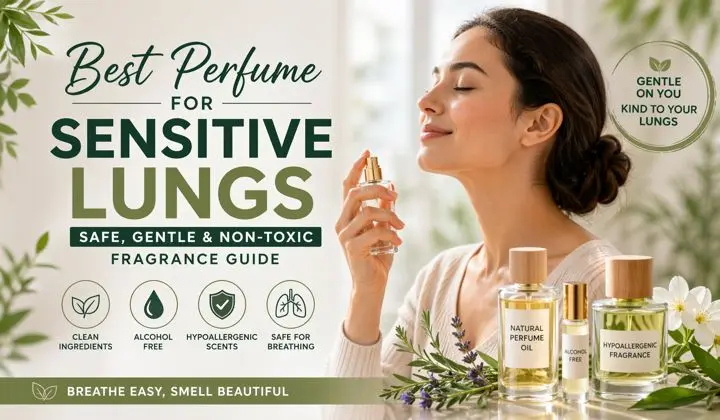
If you have sensitive lungs, you should choose clean, gentle, and simple perfumes. The safest options are hypoallergenic perfume, alcohol-free perfume, and products made with natural perfume oils. You should avoid strong sprays that contain synthetic fragrance chemicals, heavy alcohol, and phthalates in perfume, because these can irritate your lungs and make breathing difficult.
Many people think perfume is just a beauty product. But for someone with breathing issues, it can become a daily struggle. You may want to smell fresh, but even one spray can cause coughing, headache, or chest tightness. This guide will help you understand how to choose a perfume that is safe, how to use it correctly, and how to avoid common mistakes that most people don’t even realize.
Why Perfume Can Be a Problem for Sensitive Lungs
Perfume does not only stay on your skin. When you spray it, it spreads into the air around you. It releases very small particles called volatile organic compounds (VOCs). These particles go directly into your lungs when you breathe.
For a person with strong lungs, this may not cause any issue. But if you already have asthma, allergies, or fragrance sensitivity, your body reacts quickly.
Your lungs see these particles as a threat. This can lead to:
- Swelling inside the airways
- Tight feeling in the chest
- Difficulty in breathing
- Continuous coughing
This reaction is known as respiratory irritation. In some cases, it can turn into fragrance-induced asthma, which is more serious.
Another problem is the way perfumes are made. Many brands use synthetic fragrance chemicals to create strong and long-lasting smells. These chemicals are designed to stay in the air longer, which increases the time your lungs are exposed to them.
So the problem is not just the perfume you wear — it is also the perfume in the air around you.
The Real Problem People Face
Most articles only tell you to “use natural perfume” or “avoid chemicals.” But they don’t explain real-life situations.
Let’s talk honestly.
You might be thinking:
- “I go to office, and people wear strong perfume. What should I do?”
- “I want to wear perfume but I don’t want to feel sick.”
- “Sometimes I don’t react, sometimes I do. Why?”
These are real problems, and they need real answers.
The truth is:
Your reaction depends on concentration, distance, and exposure time.
- Strong perfume + closed room = high risk
- Light perfume + open space = low risk
This is why you must not only choose the right perfume, but also use it in the right way.
How to Know If You Have Fragrance Sensitivity
Many people ignore early signs. They think it’s normal.
But your body gives warnings.
Common signs of fragrance sensitivity:
- Headache after smelling perfume
- Feeling tired or dizzy in crowded places
- Coughing when someone sprays perfume
- Tight chest feeling
- Burning feeling in nose or throat
If you feel these things often, your lungs are telling you something is wrong.
Do not ignore it. Over time, sensitivity can become stronger.
Ingredients That Harm Your Lungs
If you want to stay safe, you must learn to read perfume labels.
Here are the most harmful ingredients:
Phthalates in perfume
These are used to make fragrance last longer. But they can affect breathing and even hormones. They are one of the biggest triggers for people with sensitive lungs.
Synthetic fragrance chemicals
These are lab-made smells. They are strong, long-lasting, and often irritating. They are a major cause of respiratory irritation.
High alcohol content
Alcohol helps perfume spread quickly. But it also creates strong fumes. These fumes are what enter your lungs first.
Artificial dyes
They don’t help the smell. They are only for color. But they add more chemicals to the product.
Hidden ingredients
Many brands just write “fragrance” on the label. This can include hundreds of unknown chemicals.
This is why choosing a non-toxic fragrance is important.
Ingredients That Are Safer for Sensitive Lungs
Now let’s talk about better options.
Look for:
- Natural perfume oils
- Plant-based extracts
- Low concentration essential oils
- Water-based perfumes
These ingredients reduce the chance of irritation.
But remember:
Even natural does not always mean 100% safe. Always test first.
Best Types of Perfume for Sensitive Lungs
Let’s break this down properly.
Hypoallergenic perfume
This type is made to reduce allergic reactions. It avoids common irritants.
Best for:
- People with mild sensitivity
- Daily use
Alcohol-free perfume
This is one of the best choices.
Why?
- No strong fumes
- Less spread in air
- More controlled scent
This is very helpful for people searching for perfume for asthma sufferers.
Perfume oils (Roll-ons)
These are applied directly to skin.
Benefits:
- Stay close to skin
- Do not spread in air
- Long-lasting but soft
This is a very safe option for people who still want fragrance.
Solid perfumes
These are like balm.
They:
- Stay in one place
- Do not create airborne particles
- Are easy to control
Very useful for sensitive users.
Which Fragrance Notes Are Safer
Not all smells are equal.
Safer options:
- Citrus notes (fresh and light)
- Soft floral (like rose or lavender)
- Green and clean scents
Risky options:
- Heavy musk
- Strong oud
- Spicy or smoky scents
If you want a light fragrance, always test citrus or soft floral first.
How to Choose the Right Perfume
Most people choose perfume emotionally. But you need to choose it smartly.
Check ingredients
Avoid products with synthetic fragrance chemicals and alcohol at the top of the list.
Look for labels
Search for:
- Hypoallergenic perfume
- Dermatologist tested
- Clean formula
Test slowly
Never buy and use directly.
Choose low concentration
Go for lighter options instead of strong perfumes.
How to Test Perfume Safely
Testing is not optional.
Do this:
- Apply a small amount on your wrist
- Wait 24 hours
- Notice any reaction
If you feel:
- Headache
- Breathing issue
- Irritation
Do not use it.
How to Apply Perfume Without Harming Your Lungs
This is where most people go wrong.
Correct way:
- Apply on wrists or ankles
- Do not spray near face
- Avoid neck and chest
- Use 1–2 drops only
- Apply on clothes instead of skin
This reduces exposure and keeps scent controlled.
Real-Life Usage Tips
Let’s talk about daily life.
At home:
Use a very light scent or skip perfume in closed rooms.
At office:
Choose a mild fragrance. Avoid strong projection.
In public:
Always think about others. Some people may also have sensitivity.
During travel:
Use roll-ons instead of sprays.
Alternatives If Perfume Still Causes Problems
If perfume is still not working for you, don’t force it.
Try:
- Natural perfume oils
- Light body mists
- Fragrance-free products
- Clean skincare with mild scent
You can still feel fresh without strong perfume.
Common Mistakes That Make Things Worse
Avoid these mistakes:
- Using too much perfume
- Thinking “natural means safe always”
- Not checking ingredients
- Using strong scents daily
- Ignoring early symptoms
These mistakes can increase your sensitivity over time.
Mental Side: You Can Still Smell Good
Many people feel they have to choose between health and confidence.
That is not true.
You can:
- Stay safe
- Smell clean
- Feel confident
You just need the right approach.
Where to Find Safer Perfumes
Finding the right perfume can be confusing.
You should choose trusted places that offer better options.
Platforms like De Perfume Shop can help you explore different types of fragrances and find something that suits sensitive users.
Final Thoughts
Choosing the best perfume for sensitive lungs is not about avoiding perfume. It is about using it wisely.
Focus on:
- Hypoallergenic perfume
- Alcohol-free perfume
- Chemical-free perfume
Avoid harmful ingredients, test before using, and keep your usage light.
Your health matters more than a strong smell.
FAQs
What is the safest perfume for sensitive lungs?
The safest option is a hypoallergenic perfume or one made with natural perfume oils. It should be free from strong chemicals and alcohol to reduce breathing problems.
Can perfume cause breathing problems?
Yes, perfumes with synthetic fragrance chemicals and volatile organic compounds (VOCs) can irritate the lungs and cause breathing issues.
Is alcohol-free perfume better for sensitive people?
Yes, alcohol-free perfume is much safer because it does not release strong fumes and stays closer to the skin.
How do I know if a perfume is safe for me?
You should always test it on your skin and wait 24 hours. If there is no reaction, it may be safe for you.
Are natural perfumes completely safe?
Natural perfumes are safer than synthetic ones, but they are not always risk-free. Some ingredients can still cause reactions, so testing is important.